Sunday, September 13, 2015

DENIZEN

A good-sized snapping turtle, its long neck fully withdrawn
Look at those claws.  The beady unblinking eyes.  The hissing, rasping sound it makes.  It's what you might expect a dragon’s breath to sound like.  Its carapace is flecked with leeches.  The pond holds all this:  snapping turtles, leeches, the animals–whatever they are–that make tunnels around the rim, plus boatloads of frogs.  Right now it brings to mind an African waterhole in the dry season.  We’ve had a dry August, followed by a not-wet-enough September.  The pond water has thickened with inhabitants once spread thin, now crowded like city dwellers.  Small green frogs, probably the tadpoles of spring, sit in the open on muddy beaches that had been covered with water in mid-summer.  The clay earth, my garden, is cracked open by aridity.

Leeches and mud read:  I came from the pond


Getting back to the turtle (chelydra serpentina), this creature is far from uncommon in Vermont.  The above specimen is the second we’ve come across near the pond.  Its carapace was about fourteen inches long.  They can get to be up to about eighteen inches or so.  Snappers like slow-moving water with muddy bottoms, and that describes our habitat precisely. The first time we saw a snapping turtle near the pond it was clear in which direction it was moving so we let it continue on its way, away from the pond and down the slope to the woods, presumably to lay eggs.  It was June, the time females leave the water to lay their eggs on land.  

This time the turtle was in the driveway, ambiguously facing the house.  It’s not the season for egg laying.  So where was it headed?  Ken put on a pair of gloves, picked it up, and, very gingerly, carried it to the pond and tossed it in.  It’s likely, from the evidence I'd say extremely likely, that that’s exactly the place it left behind, and we were forcing it to repeat the trip.  But the alternative was–well, where exactly?   At least in the pond it was out of harm's way (read: ugly encounter with dog or car) and would have an opportunity to rethink the whole tedious trip.  

Low water allows frogs to make use of the pond's new beach

This is the second time Ken has picked up such a heavy snapper.  The first time we found a snapping turtle it was in the middle of Route 23, inching its way to the far side. We stopped the car and Ken got out and picked it up with bare hands–yes! and it was even larger that this one–and staggered across the road, all the time ducking its snapping jaws.  Now, only now after this second snapper-lift, we know better!  A snapper should be grabbed at the far end of its carapace, hands on either side of the tail at the rear (never by the tail itself as this could dislocate the spine that is fused to its shell), and gently pulled, rear end lifted, front claws dragging, backwards to safety.  Next time.

The newly muddy edge tells of visitors come to drink.  (It's off limits to Styler, so we know they're not dog prints.)


A dearth of rain has meant good weather for haying.  Farmer Dan Kehoe got a second cutting done.  The grasses had been so lovely I was sorry it was going to be cut.  There were several acres of clover in blossom, many kinds of wildflowers, milkweed, and a variety of grasses.  The newly raw cut meadow brought to mind the freshly shaved heads of army recruits.  Raw and bleeding.  For a week afterward when we walked in the field Skyler sniffed out and nibbled the remains of mice left among the detritus.


Farmer Dan making hay while the sun shines; the baler tosses the bales into the cart
Looking almost like a ride at the fair, this piece of equipment rakes the hay into rows

I can’t say it’s been as good for the garden as for the hay.  I like to let nature takes its course and rarely water anything besides potted plants an the vegetable garden repaid me in kind.  One eggplant plant equaled one, only one, eggplant.  It was a nice eggplant at least.  The tomatoes had a climactic week and then decided they were pretty much done for the summer.  Likewise the pepper plants.  And I don’t even want to talk about the cucumbers.  There was a summer I planted two cucumber plants and ended up with over thirty cucumbers.  (Cucumber salad, cucumber soup, pickled cucumber, etc.)  Not this time.  They are stunted and few.  Even squash–pattypan this time–a vegetable that by reputation always overproduces and overgrows, produced a single product.  I was so resentful of that plant I have yet to cook it.  I may let it rot.

Good drying weather for the wood pile

A remarkably good yield of raspberries. 

I may be glad in the darker days of fall to come that there was so much heat and sunshine in late summer.  It was, after all, a good year for raspberries.

Sunday, August 23, 2015

TIMES IN VT AND ME

BAILEY ISLAND, ME


From the rear:  A board, various tubes, a small green kayak, the Laser (fast sailboat), sea kayak, another board another small kayak.  Not shown here:  The Optie (small sailboat), two rowboats, the punt, and big sailboat (the "Zube")


I want a little red kayak!  Every day I took this little thing out, although it just barely fit me having been Hans's long before he graduated to bigger stuff,  I grew fond of how easy it was to lift and maneuver, even in waves and wind.  I think this would be nice to have on Lake Champlain.  Or Otter Creek.


It's so easy to get used to having the (benevolent) ocean right in front of you each day, as near as stepping out the door.  The lack of amenities (tight quarters: there were seven of us, and would be eleven at the weekend) doesn't matter, unless we were to hit a run of really bad weather.   We missed coming here to Bailey Island last summer, our first-ever miss, because of Ken's surgery last August, although he had managed to make it to Mohegan Island to meet the Zube after the Portland to Camden race.  This year we might have missed out again but for a somewhat flexible chemo schedule for Ken's continued battle with colon cancer.  


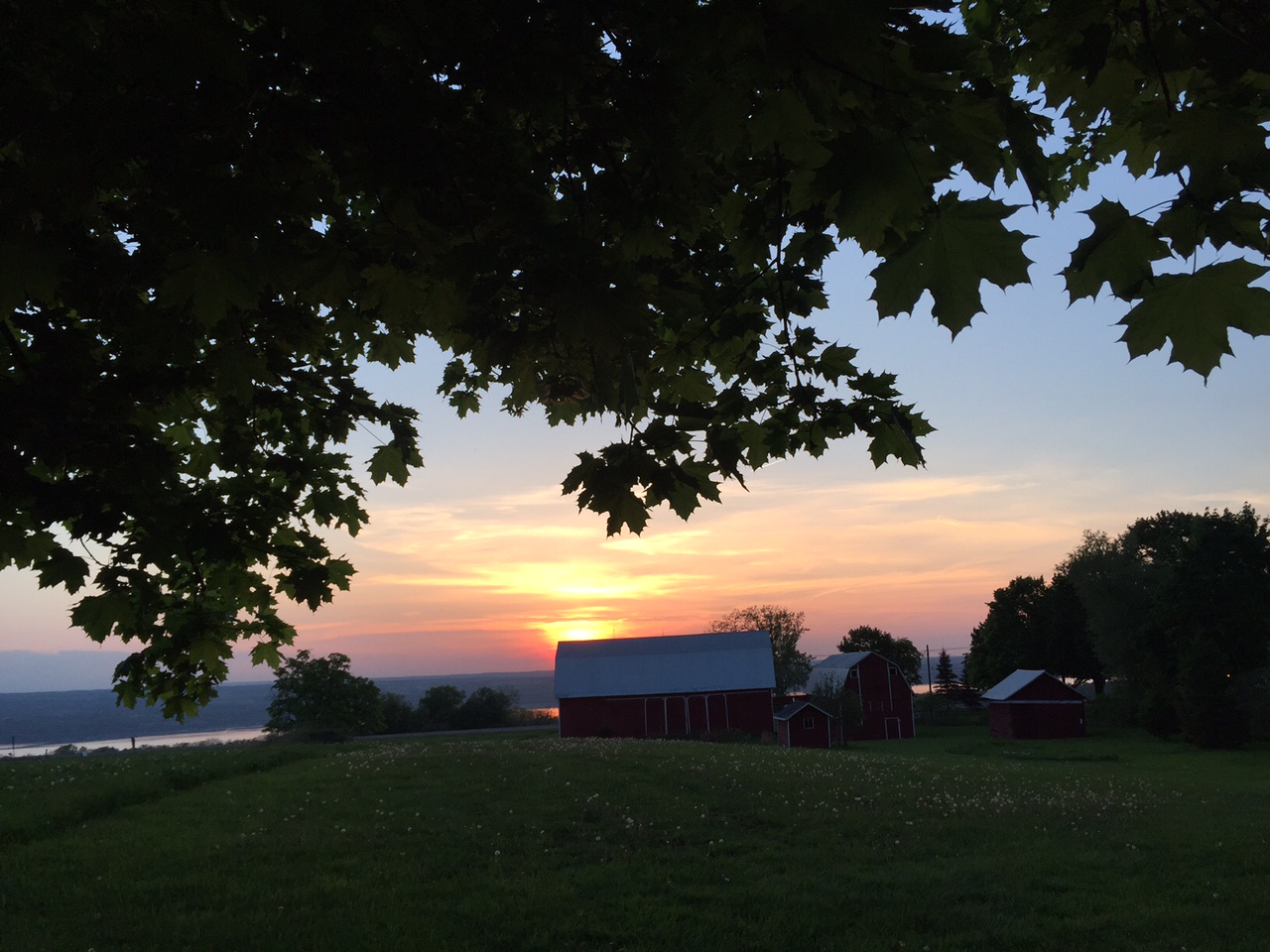
An especially calm evening, the tide mostly out

One afternoon we hunted our dinner.  At a small island (Pond Island) that barely jutted out of the sea we searched under the seaweed for mussels.  I found a few, Leah a few more, but it was Olin who found the most, simply leaning over the bow of the punt and scouring the niches in the rocks under the seaweed.  Meanwhile Cliff snorkled for oysters.  There were enough of both oysters and mussels for six servings of steamed mussels, fried oysters and, thanks to a catch of Olin's, baked sea bass.


Crystal clear waters surround the reef/island where we looked for oysters and mussels


Leah looking over the seaweed for mussel potential

Olin–rarely captured on camera of late–deeply into "The Martian" (that I'm now reading) on another day while sailing to Sand Island


L to R: Olin, Leah, Cliff, Caroline on Sand Island
(Hans was in Marblehead, working.  Well, teaching sailing, that is.)

Sand Island:  Privately-owned, empty of people except for us, decorated with the detritus of many presumably welcome visitors (there are guest moorings), all of whom seem to have made contributions to the accumulated kitchy decor.  The boardwalk leads to a high point.  The rest of the island is undisturbed and beautiful.  

The city of Bath on the peninsula north of Brunswick/Bailey Is. is quintesssential old seacoast Maine.  My cousin Fred and family bought their next home there last year.  We were only able to come visit for the first time this summer.  But we hit it lucky as while we were there they had a party and we met all their terrific neighbors, all Bathonians (Bathers?  What's the word, folks?)

On Beacon Street, Bath.  Much renovation still to come.


Briscoe (dog), Mary, Ken, Fred, on gorgeous Spinney Beach, Phippsburg, ME


BACK IN THE VT


Not ME, but VT.  It made me think of Maine though:  Otter Creek at Vergennes Falls Park

More VT waters:  Carly at the East Middlebury swimming hole.  We brought Skyler here to swim, but he prefers water for drinking purposes.


Animal visitors dropped in during early summer (see "The Hole in the Bank and Other Tales.")  There were muskrats in the pond, swallows on the porch, weasels under the patio, snakes in the grass, turkeys in the field, and tree frogs everywhere.  My last sighting of the muskrat was in late July when I came across him (her?) boldly chewing grass not twenty feet in front of me.  When he realized how close I was he jumped into the pond and swam to the other side.  I have not seen a single muskrat since.  My first sighting of a weasel came when I was standing at the edge of our patio one morning.  The weasel popped up on his hind legs and looked right at me only two feet away.  I was startled and made a sound like "Oooh!"  He didn't run, but instead came closer.  And still closer.  I thought he might run right over my feet.  I said "Oooh!" again, probably louder this time, and he ducked under the patio. Was it his home he ran to under there?  Were there other weasels waiting for a report from the surface?  I never learned anything more, and failed to see another weasel all summer.  (Weasels, by the way, are dogged hunters of rodents.  We had spotted rodents living under the patio in early summer, and judge it likely that weasels took over their living arrangements.  After a hearty meal, perhaps.)


'Tho not my photo, this is about how the weasel looked at me.
Quite small, and, I have to say, pretty cute.


Speaking of animals, the Addison County Field Days was a big event this year for Audrey who was showing two cows this year for her 4-H group.  She also exhibited at the state Expo.

Audrey in full command of her award-winning cow.

And still speaking of animals...

One of our most excellent guests, Kelsey, and Skyler caught at an intimate moment

And yes, speaking of animals, most particularly dogs, we dropped in to see the Dog Chapel on Dog Mountain outside of St. Johnsbury on our way home from Maine.  It's the creation of the Vermont artist Stephen Huneck who was prompted by a severe illness and recovery to build a place that would honor the memories of dogs.  Over the years since then the inside of the chapel has become adorned by post-its put up by dog-owners in memory of the dogs they once had and loved.  We left a note, of course, for Harry, our Harry "who was his own dog."

The post-it notes have made the walls nearly as colorful as the stained glass window. Might they at some time become too much of a good thing and considered a nuisance, like the "love-locks" on Parisian bridges?


Amen

Friday, July 10, 2015

THE HOLE IN THE BANK, AND OTHER TALES

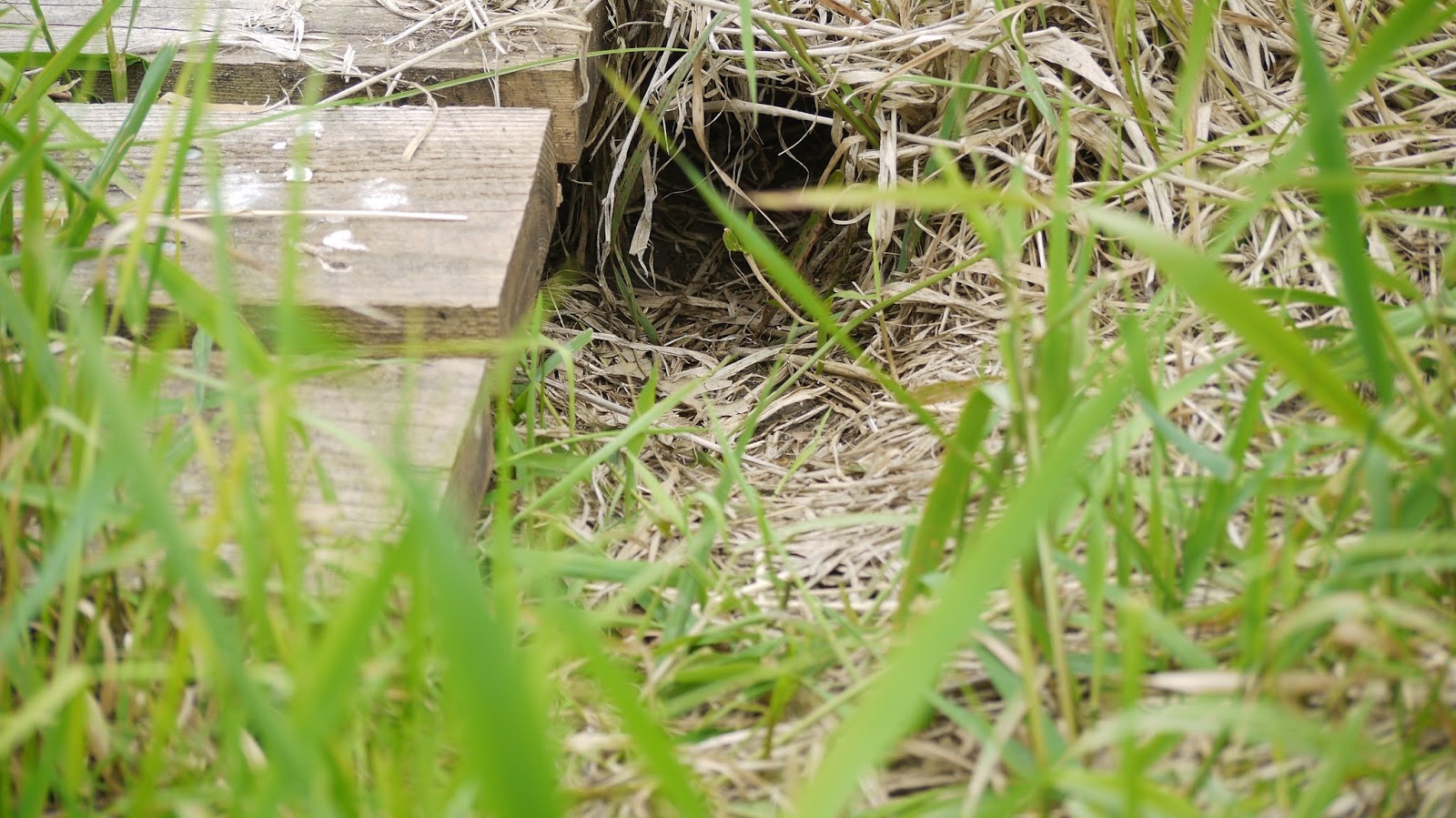
The hole in the bank.  Who lives there?


Cycle of Life, I:  On the House and Around It


The sand cherry bush behind the house held nearly thirty goldfinches at once.  That was in May, when spring was still unfolding. Its dark purple leaves hadnt opened yet.  After the goldfinches the bird visitors were other kinds of finches, plus woodpeckers, cardinals, nuthatches, chickadees, titmouses (titmice?), grosbeaks, and mourning doves that picked up what seeds fell on the ground.  In July the feeder has become a draw for aggressive starlings and a few red-winged blackbirds.  Nevertheless chickadees, finches and grosbeaks still stop by when the big birds aren't hovering.   On a recent hike we found a bird feeder lying on the forest floor, one of those feeders that have a cage around the main tube to screen the seeds from large birds.  Were giving it a try.  But we werent encouraged when we saw a couple of starlings stretching their necks through the opening to cop a few seeds.  We could just stop feeding, but we don't want to.  At least we havent had bears at the feeders.  Even when they're hungry I suspect crossing a large open area to get to the seeds would be intimidating.  


A few of the goldfinches decorated the sand cherry bush in May

Come to think of it, our raspberry patch is very close to the woods...

And that reminds me, what exactly was out there that night last week when Skyler got all wrought up?  Around ten o'clock or so he got very agitated and began to whine, whimper, pace, and bark.  He would not stop barking, and kept trying to look out of windows.  Of course we were trying to sleep.  It was nearly two in the morning when I decided to get out of bed and take him outside to face down whatever he thought it was.  (My thinking was, if we confronted what was or wasnt there––I had decided on the wasn't, that he was only barking at ghosts––he would understand and would therefore stop barking.)  I put him on the leash and we headed out.  The motion detector light had switched on illuminating a circle around the cars.  Beyond that was complete blackness.  I hadn't thought to grab a flashlight so when Skyler started up a low growl I turned us around and headed for the front door.  He didnt calm down for another hour.


Skyler stands guard against whatever

Woodpeckers seemed bent on eating the house last week.  The pileated, the downys, they were all in on it.  Theres a corner section they seem to favor near the bird feeder where one after another likes to perch and thump away.  Insects underneath rotting wood, wouldn't you think?  A search finds nothing noticeable.  They keep at it.  We look again.  Theres no rotting wood.  No sign of insects.  We give it a heavy dose of bug spray anyway, follow that up with a thick layer of wood filler, and follow that up with a coat of fresh paint.  Later that day, a woodpecker lands on the same corner and starts to peck.  Maybe hes just showing off.  Nobodys going to tell me where I can peck!  Or maybe its only habit:  Well, it was perfectly fine this morning!  This bears watching.

On the front porch we are on constant lookout for burgeoning wasp nests.  Last year I was slow to notice; too much looking down at book or iPad and not enough gazing at the ceiling.  Glued up there  in places where the rafters toe in tight Vs there were about ten starter nests that I knocked down, each a bit smaller than a golf ball.  As for the swallow nests, we had left the ones from last season thinking the swallows might reuse the nests, hence avoiding the messy (for us) project of making them anew.  They didnt.  A new nest appeared right next to the top of one of our doors to the porch.  In no time heavy droppings began to appear and thicken.  Eventually four chicks appeared and fledged days later.  The last time we saw the chicks there were three perched next to the nest.  Then there were two.  Then they were gone.  But not gone very far:  its hard to say which swallows are which, but five or six or more continue to swoop under the porch ceiling as they scoop insects around the yard and pond.

 
Three of the four swallow fledglings next to their nest.  The fourth has probably already flown off the perch.


Cycle of Life, II:  In the Field

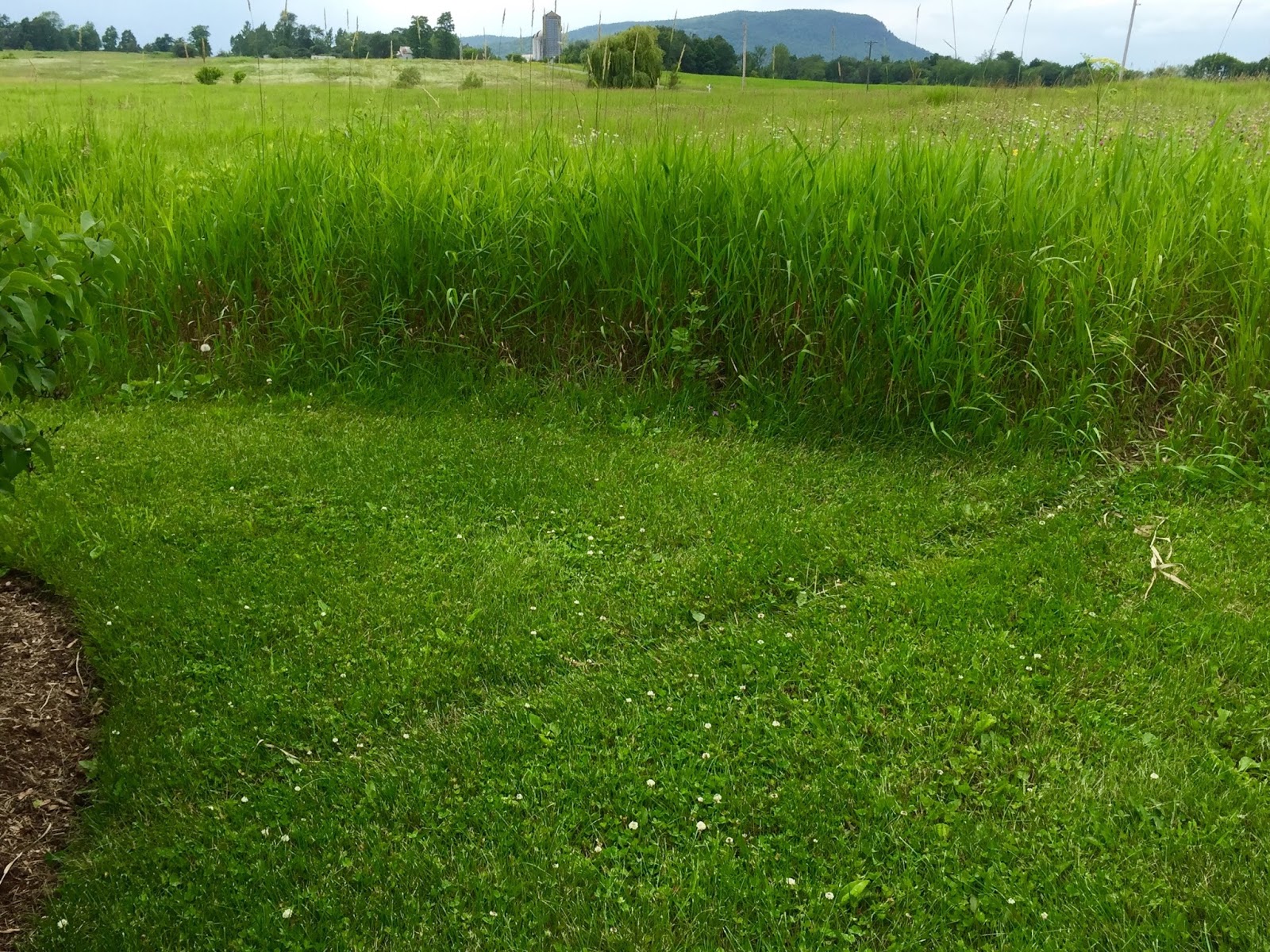
I dont know how many creatures live in our field.  Many.  Fortunately for them, our local farmer doesnt mow until August when everything has bred and left the nest.  Birds fly out every several yards as you walk around the paths Ken has cut in the high grass.  Deer nap in groups in the dense cover.  (We see the parted grass giving away where they walked, and the large flattened areas where they bedded down.)


The meadow is full of wild flowers and the grass is getting tall

A turkey with three poults (chicks) appeared in the field last month.  According to my readings, a turkey may lay 10-14 eggs, usually one a day, and incubate them for nearly a month.  (At that rate it could take a month and a half for them all to be incubated.)  The nest is merely a shallow depression, so it was probably right in the field.  Of course turkeys are everywhere, even on suburban lawns, but here they prefer open forest, preferably with oak and hickory with interspersed clearings and fields.  Ideal territory, this.  On the down side (if you are a turkey, that is) there is a long list of turkey predators in addition to man:  skunks, raccoons, groundhogs, foxes, bobcats, coyotes, and hawks, all of which we have in varying degrees of abundance.  To that add: dogs. While Ken was walking Skyler on a long leash Skyler pounced on a half grown chick that popped out of the tall grass onto the trail.  Ken pulled him back, but it was too late.  One dead poult.


Cycle of Life, III:  The Hole in the Bank

Doings in the pond pick up in early spring.  Ducks come to visit:  mergansers first, then mallards.  They hang around for a day or two, then disappear.  The occasional heron.  One duck party left behind a single egg, only discovered last month.  (Were there more?  What happened at the nest?)  A pair of Canada geese stayed the longest.  Wisely, they never strayed from the far side of the pond.  Skyler threw them the occasional bark, but mostly got used to their presence.

One day not long ago we saw something brown swimming across the pond. The long way, from the bank to the bridge.  Almost every day he (she?) swam this same route, disappearing under the bridge.  Sometimes it had a small branch in its mouth.  It had to be a muskrat.  One day we noticed a path in the grass that led in a straight line from a small opening in the tall reeds at the pond edge across a mulched planting of shrubs and on into the uncut meadow.  The trail was only about 6 inches wide and was some twenty feet long from pond to tall grass.  It was as if someone had dragged a small bag of sand across the lawn.  


The mysterious trail

What was more surprising was that once it entered the meadow the path meandered in several directions and circled around on itself in a section of maybe ten yards or so.  We puzzled over this.  The creature that swam across the pond was clearly a muskrat.  Would a muskrat have made this trail?  Could it have?  (Their long tails drag when they walk across land.)  What else, if not a muskrat?  Muskrats build lodges that generally protrude from a marsh or muddy pond (ours certainly qualifies).   But we saw no lodge.  

The disturbed meadow at the end of the muskrat's trails, probably the result of foraging.

A tunnel next to the bridge.  Another muskrat creation.


Wikipedia reports:


“In areas where they become abundant, they are capable of removing much of the vegetation in wetlands. They are thought to play a major role in determining the vegetation of prairie wetlands in particular. They also selectively remove preferred plant species, thereby changing the abundance of plant species in many kinds of wetlands. Species commonly eaten include cattail and yellow water lily."


More than likely the muskrat(s) are entering the meadow for sedges or other plants they like.  I have no idea what those might be, as all I see are clover, a bit of wild parsnip, buttercups, and the usual meadow grass.   At one end of the pond our usually abundant cattails are nearly gone.  Muskrats also eat the occasional frog and tadpole (which we have in abundance). I’m saying “they” because like every other creature muskrats are surely reproducing.   And muskrats reproduce mightily:  Two or three litters a year of six to eight young each is a lot of muskrats. But where are they?  We looked for a small lodge or “push-up” and thought that maybe they lived on the other side of the pond where the water drains into a seasonal stream.  Then I remembered they like to burrow into steep banks.  There’s only one section where the pond has steep sides and that is alongside the driveway.  There it was:  a large hole in the bank just inches above the water.   There were also hints of possible underwater entries.  A muskrat family is what we have.  How many muskrats are too many?  We will have to wait and see what comes of these neighbors.

Entrance to the muskrat lodge

Sunday, May 31, 2015

HUDSON RIVER SCHOOLING


In Thomas Cole's studio


Even though we look across Lake Champlain to New York State every day, we have never spent as much time exploring it as we have explored, say, New Hampshire.  Or Maine.  Simply saying New York State is a pretty vague reference, considering that it literally covers a lot of ground.  I suppose I still see it as an ex-New Yorker, NYC having been known to me as the City when I grew up there, as in the City, with its sphere of influence that coats everything within a hundred miles in every direction with NYC pixie dust.  But then theres all the humongous rest of it.  This includes the known world (the Adirondacks, the Catskills, possibly the Finger Lakes) and the unknown world (the almost-Midwest part and whats called upstate, meaning whatever else.) 

Sunset over Seneca Lake from the eastern side


On the northern head of Seneca Lake, one of the Fingers (lakes that from the air really look like skeletal digits) is Geneva, our destination for the graduation of grandson Nick from Hobart/William Smith.  En route we had been entertained by the names of places we were passing through.  What better than Ninety Six Corners, Holland Patent, Hoffmeister, Speculator, or Street Road?  Later on a Graco-Roman patch arrived with Syracuse, Seneca, Rome, Ovid, Pompey, and signs to Ithaca and Troy.


Hobart College docks in Geneva, Lake Seneca fogging up

Then it was bagpipes and Elgars Pomp and Circumstance.  Both would be repeated a week later for the graduation of grandson Hans from the Waring School in Massachusetts.  Nick was one of two student speakers at Hobart, talking of his dads influence and support for his experience at Hobart.  Hans was one of 28 speakers (yes! three minutes each) at Waring where each student in this small class spoke humorously, seriously, poignantly about themselves, and their past four years at Waring. 

Nick, with proud parents Mike and Christine


Hans.  All 28 graduates wore wreaths made by parents the previous evening.  Next year:  Here at Middlebury!


Between graduations we crossed through the rolling hills and apple country of eastern upstate to the Catskills and, ultimately, Hudson, New York.  Hudson is a town that bridges two parts of New York State:  the upstate part and the NYC sphere, the latter more strongly than the former these days.  


Dining in Hudson:  Ken shadowed, at Ca'Mea

Dining in Hudson:  Limoncello dessert, at Ca'Mea


A mere two-hour Amtrak trip from Penn Station brings New Yorkers up the Hudson River to the oldest continuously operating train station in the country.  (Given our second-rate national railroad system that might not be saying much.)  The NYC pixie dust sprinkled somewhat unevenly in Hudson is responsible for the many good restaurants, art galleries, boutiques, and exorbitant prices in local B&Bs.  The town has good bonesa treasury of 19th century and early 20th century buildings– making for a beautiful downtown.  All is not entirely rehabbed or gentrified, as is evident by decay amidst the restorations, as well as the less-than-chic housing around the edges of town. 


Some houses have restoration potential...

Others are looking terrific...

And some are just amazing looking, like our B&B.  (That's not our car.)


But there are streets that look a bit depressing

A still functioning old Hudson firehouse, right on Warren Street, hard by galleries and restaurants


When you drive across the Rip Van Winkle bridge and cross the Hudson River immediately east of the Catskills you can't miss seeing Olana.  The creation of 19th century painter Frederick Church, Olana, just a few miles south of Hudson, adorns the mountaintop like a Christmas ornament on a tree.  I've wanted to see it up close ever since I saw it years ago on a return trip from Pennsylvania.   We took a tour the next afternoon. 

Olana, in an orangey light  (NYTIMES)


Church was a member of the Hudson River School of 19th century American landscape painting.  His mentor was Thomas Cole, one of the best known of that group of artists.  Many people have undoubtedly heard of the Hudson River School since the artists most famous works are as often found in American history texts as museums.  They illustrate an age, a time when the Industrial Revolution was being felt in areas once pristine, trees were being churned into lumber, and railroads were being blasted through.  Up to that time landscape painters of quality were expected to be European and European-trained.  Hudson River School was a derisive term at the time for a group of artists who were self-taught and very much unschooled. No Beaux Arts for them.  How un-European!  How American.  They took their inspiration from the natural world of this newer country, and put it on the map for Art. The Catskills were inspiration for Cole who painted the mountains as Gods creation rather than translating them photographically.  Enhanced, in other words, by admiration, worship even.  You can take several hikes out of Hudson to see some of the places that inspired  paintings like Kaaterskill Falls.  One can still see the mountains to the west from Coles porch looking pretty much as he saw them.


The Thomas Cole house.

The Catskill view, from Cole's porch

Cole's studio


Frederick Church, like his contemporary Albert Bierstadt, painted big:  great wide-angle landscapes, imagined like enhanced visual memories.*  They say to us: Nature is spectacular!  Look!  Appreciate!  This in the mid 1800's when the development of roads, destruction of forests, and the rise of industry was chugging away big-time.  The 20-odd painters of this era helped put the American landscape on the map, and became the most popular artists of their time.


The entrance facade.  "Welcome" is written in Arabic atop the front door.

With wealth from his huge commercial success as a painter (he was a savvy promoter of his work) Church designed his dream house in the late 1860's.  It incorporated his ideas of beauty and his admiration of oriental architecture discovered in his wide travels.  The house was technologically advanced as well:  central heating and plumbing!  Mark Twain visited and was inspired architecturally.  (His house in Hartford, Connecticut, built a few years later, is about as elaborate as Olana.)  Thanks to long-lived heirs with no penchant whatsoever for change, the home remained intact to this day, inside and out.  (Although rescued at the last minute from sale by a nephew in 1966 following the death of Church's daughter in 1964.)  The vast grounds, albeit somewhat less vast than they once were, had been shaped by another contemporary, the Frederick Law Olmsted of Central Park fame.  The sweeping drive to the house, the rounded meadow with trees in just the right places, the view of the Hudson River mirrored in the artificial lake––it all reminded me of World's End in Massachusetts, also an Olmsted design.  


Landscape by design:  the shape of the lake at left mirrors the shape of the Hudson.  Not seen so clearly on a misty day.

A view toward the Catskills from an Olana porch.  You can see the Rip Van Winkle bridge.


Sadly no photography was allowed inside Olana.  This was disappointing because the interior was completely furnished down to the last teacup, and as eclectic as the exterior. Olana also hosted, as did the Cole house, a contemporary art exhibit sponsored by the guardians of both homes, a group called River Crossings.  My second-favorite piece was an outline on the wall in brilliant silver of the entire Hudson River by Maya Lin.  My favorite piece, though, was an easel set in the dining room that held a copy of one of Churchs landscapes well on its way to being turned into Swiss cheese by carved woodpeckers.  A comment on his relation with the natural world, perhaps?  He was an early conservationist as well as painter.  An admirer, one may assume, of woodpeckers.

 
Landscape, with woodpeckers.  No, I couldn't have taken this photo.  Ripped from the pages of the NYTIMES.


 *My favorites of the Hudson River School?   Albert Bierstadt's "Estes Park," and Church's "Niagara Falls." Both highly romantic pieces.