Friday, February 10, 2012

OF MEAT AND MINES


Houses in Port Henry, NY


The Police Blotter in our local newspaper, February 2:

”Received a complaint from a North Street resident about a suspicious white male in his 40’s.  The man apparently asked the resident if he wanted to purchase some steak or chicken.  The resident told the police he had a friend who encountered a similar incident, and the salesman later broke into his friend’s house.  The suspicious man’s black Toyota pickup truck had New York plates, two freezers in the back, and a sticker that read “Prime.”  There were no further complaints related to such activity.”

This is a story that belongs to this part of the country in several ways. First of all, there’s the issue of meat. 

You might well ask:  What’s the likelihood of someone knocking on your door and asking if you want to buy meat?  Stolen meat?  Poached meat?  Who would buy meat without knowing where it came from, anyway?  No, I don’t think anyone is going to knock on our door anytime soon looking to sell meat. However, up here buying meat from people or places that are not actual meat markets is not unusual.  After all, people who shoot deer may end up with some two hundred pounds of venison.  And people who raise animals for their meat sometimes end up with more than they need.  At the end of this month, for example, we will be buying half a pig (the other half going to my daughter’s family in Newburyport) from someone who will have more pork on his hands than he needs after having several pigs slaughtered.  There’s meat for sale all over the place at different times of the year, grass-fed, organic, or not.

So much for meat.
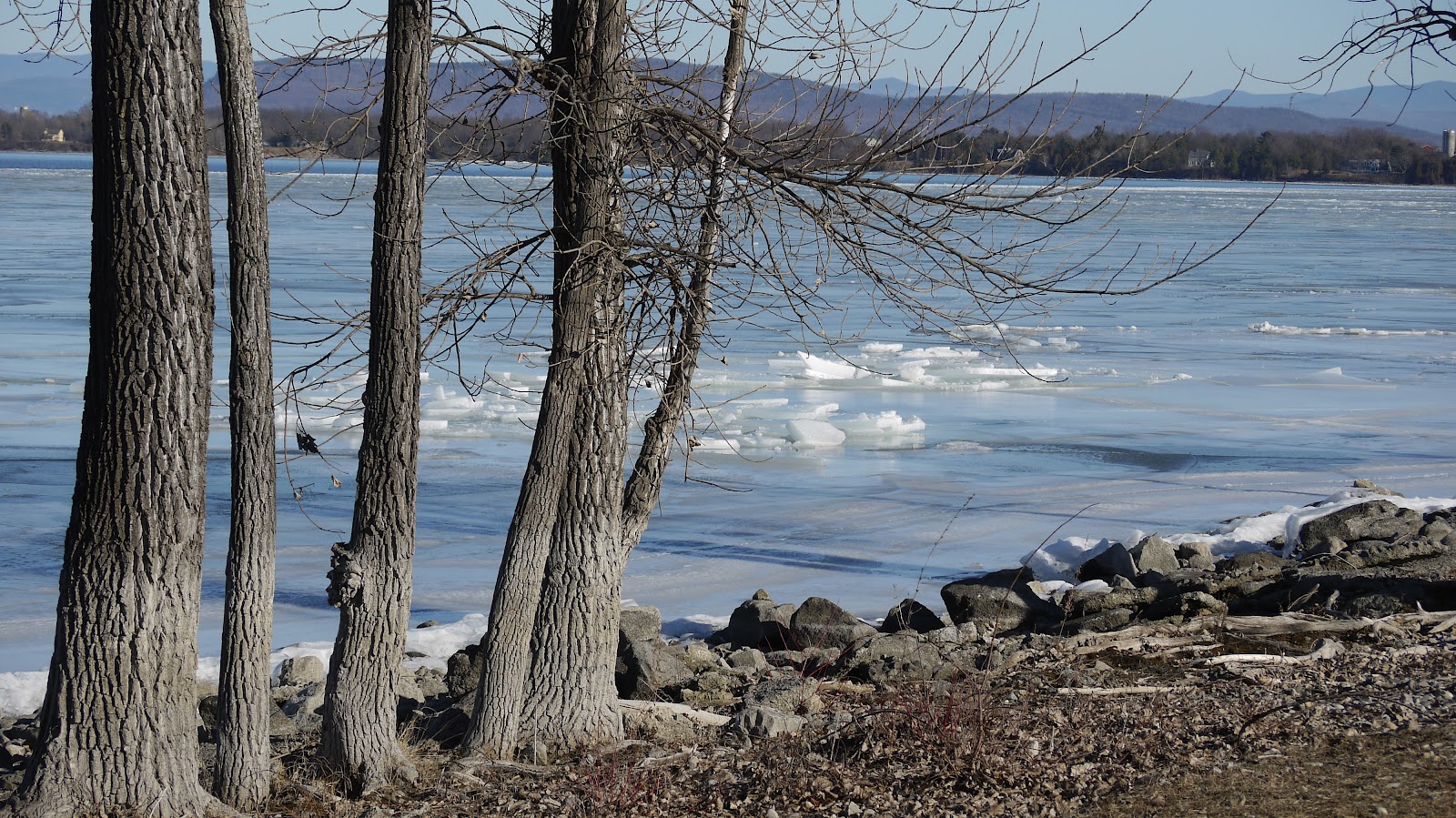
Looking back toward Vermont from the New York side, Port Henry

More interesting is the fact that the suspicious man’s black pickup truck had New York plates.  Maybe mention of the New York plates was inadvertent. In any case, some Vermonters have a thing about New York State, or at least the part that’s directly across Lake Champlain.  I heard a story, possibly apocryphal, about someone from Vermont, I think it was an ice fisherman, who left his pickup on the Lake overnight, quite near the New York side.  Too near, I guess.  Next day, the pickup was on blocks, all the tires gone.  If he’d parked it on the Vermont side, you see, this wouldn’t have happened.  So they say.

The New York side of the Lake is noticeably different from the Vermont side.  At least one town immediately across Lake Champlain–I’m thinking of Essex, for example, at the New York end of the Charlotte, Vermont, ferry–has that old New England character with quaint buildings, an interesting store, an art gallery, an ice cream shop, a small restaurant, nice homes, all with good paint jobs.  If you traveled no further you might imagine the road ahead would lead to much the same.  This is, after all, the home of the famed high peaks that loom just behind the foothills that begin right at the shoreline.  But it doesn’t.  Just as the Adirondack mountains are wilder and rougher than the Green Mountains, more woods than meadows, less farmed than mined, the town also are rougher and more unkempt.  

On this side of the lake the mountains seem to press aggressively into some of the houses.


In the Adirondacks, but these are not actual mountains.  They are mine tailings near Moriah.
It’s mostly about mining.

Mining operations began in 1824 with the discovery of a top grade of iron ore in the mountains around the New York town of Moriah.  A lode called the Cheever bed, located some 1 to 1-1/2 miles north of Port Henry, is the oldest, although there are other, mostly smaller ones. In Moriah's earliest days settlers would go to the mine, pile the iron onto sleds and drag them back to town, according to Wikipedia.  The Cheever bed began to be worked more seriously in 1853, along with the other smaller beds. An economic boom was set in motion.  Along with mining companies came the railroad to bring the ore from the towns of Mineville and Witherbee to the main line at Port Henry, eventually turning that port into a busy transport terminal for the railroad and lake barges. An aggregate of 230,000 tons was produced from the ore beds in 1868, presumably the heyday of iron mining.

The local economies of towns like Moriah, Port Henry, and the uninspiringly named Mineville boomed for as long as the mining operations lasted.  But that wasn’t long enough.  In the early 1970’s when huge open pit mines were developed out west, the mining industry in New York State went bust. Now the towns look worn out and tired, with more closed storefronts than open ones. This probably has little to do with the recession of recent years; this downward slide looks as if it’s been going on for decades. 

Several of the large companies that operated the mines left their marks in the local architecture. The company headquarters of Witherbee, Sherman now serves as the Moriah/Port Henry town offices. 


The amazing building that was once a mine company headquarters; now town offices.


Once grand but now decayed Victorian-era buildings beg for rehabilitation. Streets are still filled with company houses, many of which were built with blocks made from iron ore tailings.  Sadly there are no signs of the charms that animate Essex. 


This Moriah town park has it all: directional sign to "Moriah Shock," gas or electrical meter, a digital clock, a gazebo and who knows what else, dedicated to a Medal of Honor winner.


Someone may be trying to save this house in Port Henry.


Rexall drugstores went out of business in the late 1970's.


Perhaps all is not lost:  In 2011 Port Henry was the port where sections of the stunning new Champlain bridge were assembled and towed to its site.  And the area has one noticeable industry: not far from town is the New York State Shock Incarceration Correctional Facility.  Housed, fittingly, in former mine buildings in a remote area north of Mineville. Which is itself remote.

Thursday, February 2, 2012

SNOW AND ICE AND DOGS


Gazing west to the Adirondacks I could be convinced this is the heart of winter.  The mountaintops have been white since December.  But there's no telling how deep the snow is.  The Vermont mountains to the east of us have no cover, thin cover, or half-way decent cover at the highest elevations.  Ski areas have been suffering, as has the Vermont economy that depends upon ski tourism.  Most of us have been skeptical of ski reports, not expecting much, given this strange cycle of cold followed by warmth, without a single serious snowstorm.  We see the words "frozen granular" and figure it's time for spring skiing.  ("Granular" being ski slope-speak for half-melted soggy and/or icy stuff, permissible in late March or April.)


In the valley winter has been looking more like this:


Enough snow to last maybe a day or so, then back to bare ground.


Fifteen or so miles away things can be very different.  Monday, the 30th of January was one of those days when things were unexpectedly and spectacularly different.  It was cold here in the valley although just under freezing and the ground was completely bare.  There was a mild wind.  The night before we had our usual 1-2 inch dusting of snow. It was time to give Sugarbush a try.  As we drove there we began to notice snow cover beginning above the town of Bristol, altitude 570 feet.  (Vergennes is at 194.) By the time we crested Appalachian Gap at 2375 feet ("App Gap" in local lingo) on Route 17 the snow was a respectable 2 feet or so, a fierce wind building drifts.  On the other side of the Gap the Mad River Valley ski area was operating and the slopes looked good.  When we got to Sugarbush we could hardly believe our luck.  There was powder skiing on a packed powder base, a wintry wind swirling with fresh snow, and few other skiers.  Better yet, all the snow boarders were in school!


Other results of this not-quite-winter weather have included a lot of ice, like the ice shapes on our pond:


And sometimes the ice has covered the driveway, like this (claw marks in the foreground are the result of braking with studded snow tires):


Meanwhile, here by the fire


...are Rufus and Harry.  Rufus just had his vision restored (double cataracts removed) and will be recuperating for the next two weeks wearing a collar to protect his newly repaired eyes. He's not pleased with the collar, bumping into things, getting stuck, but his world has brightened and a playful and contented personality is blossoming.


Going where their noses lead, as Rufus will again once his eyes have healed.


Tuesday, January 10, 2012

THE SKY ABOVE, THE DOGS BELOW


The sky tossed us a freaky snowstorm (twelve inches!) the day before Thanksgiving, but within the week all the snow that fell had completely disappeared.  Since Christmas, or as far back as the first official days of winter, we haven’t experienced serious winter weather.  I mean the real thing, winter the way it’s expected to be in Vermont, the way everyone imagines it–stormy, snowy, cold.  We are certainly ready.  We look at the cloudy skies–and they have been cloudy a lot– with hope: we have cross-country skis, downhill skis, snowshoes, our tractor is outfitted with a huge snow blower and chains, and snow shovels are at the ready aside the front door. But, alas, we have only had dustings of snow strewn like confectionary sugar that are either blown away or melted by the next day.  Our pond is in a pattern of freeze, thaw and refreeze.  (Interestingly, the water that was so muddy in summer is now clear.) We managed a taste of downhill skiing one day last week in pretty good conditions, although trail choices were very limited and cross-country was out of the question.  We find ourselves looking more to the beauty of our dark storm-less clouds and our magenta and ochre sunsets than our drab snowless landscape.


Two dogs live here now.  A few days before Christmas we added Rufus, an eight-year-old beagle from the Addison County Humane Society, to the household.  There were three beagles there at the time, a two-year old, a middle-aged guy, and an older guy.  The young beagle was insanely excitable, the middle-aged one walked all over Harry and pulled on his leash like the dickens, but the older guy was “just right.”  At the shelter he bore the uninspiring name of “Bud.”  Since he was said to have been a stray in Panton with no additional back story, we figured “Bud” was just a throw-away “hey, bud” kind of name.  So we renamed him Rufus.  Rufus been a fast learner of “Rufus,” since he surely thinks it means some kind of food.


Tiered seating, Rufus below, Harry above

Beagleness is a state we didn’t know much about, but we’re learning.  An acute and sensitive nose is what being a beagle is about.  Smelling is more important than seeing, luckily for Rufus whose eyesight needs some improvement.  (A trip to a canine ophthalmologist is on the schedule.) Beagles also come supplied with a tremendous howl.  Fortunately for us Rufus doesn’t feel the need to say very much in this loud voice (we’ve only heard it at full volume once, briefly, at the vet’s).  He’s considerate of Harry, obedient, friendly, and low key.  Age is a factor.  Although Christmas was spent with a large crowd in Newburyport, preceded by a long car trip, Rufus took everything in stride even though it was only our third day together.

Audrey with Rufus and Harry on Rufus' first day


Sunday, December 18, 2011

AFRICA, STILL ON MY MIND...


Hippos, a major danger to humans in Africa, in the Zambezi River.
(Also the subject of this year's Christmas card.)


A few weeks after returning from Africa the distance from there to here seems to be growing, as if I’m looking at Africa through the wrong end of a telescope.  Vermont is so benign, Africa not.  Here I can walk in the fields and forest (“the bush”) and I won’t be eaten, I can walk at night and I won’t be robbed, and our mosquitoes won’t give me malaria. In Johannesburg–where you don’t walk anywhere at night because you could be mugged–I picked up a memoir written by Peter Godwin called “Mukiwa: A White Boy in Africa” to read it on the plane.  (Godwin has written incisively about the sordid regime of Zimbabwe’s Robert Mugabe in “When A Crocodile Eats the Sun,” and told of far worse in “Fear.”)  What struck me in “Mukiwa” were the ordinary dangers in everyday life–forget wars, failures of the state, or haphazard medical care.  I’m thinking of his tale of the cobra that lived under the front porch steps for years after he bit the family dog, blinding him for life.  Or you can read the stories of Alexandra Fuller who grew up in Zambia.  Her “Don’t Lets Go to the Dogs Tonight” is replete with childhood perils, to which add: land mines.

"Oooh, I wonder what's under that bush?  Why don't we have a look!"
"Oops, I think those are lions!"


Recently I read “The Magnetic North” by Sara Wheeler in which she mentioned a guy from Togo, one Tete-Michel Kpomassie, who made his way from Africa to the Arctic over an eight-year period early in the 1960’s.   I enjoyed reading that he fled Togo to avoid a ritual involving a python, and, deciding he would go as far away as he could from pythons and anything like them, headed for python-free Greenland where he lived for several years with the Inuit, eventually producing a book called “An African in Greenland.”

"And here's an unusual looking doggie..."
Here in benign Vermont we have bears, but not the dangerous kind. Last March we only saw the partial remains by our creek of one that had been shot.  We have our New England version of impala–deer–but we haven’t seen any at all since a single doe crossed our field months ago.  The one moose we could count was the one spotted last spring near downtown Vergennes.  Nearly every night we can hear an owl in the woods behind our house.  (Our resident heron is long gone.) And that’s about all I can say for our wildlife count.  (In Africa we filled a notebook with the types of animals we saw!)

In Chobe it was possible to capture all at once (from left to right)
one beautiful, tho' unknown, bird, a fish eagle, a warthog, and impala. 


Hunters out for deer this year report far fewer kills (600+ versus 900+ last year in Addison County) and far fewer deer seen than in the past several years.  The reasons for this aren’t clear, but lower numbers have been attributed to the epic snowstorm at the end of last winter (the snow that came the day before we moved, just for the record), and also to the lateness of the rut.  When bucks are in rut they have only one thing on their minds and are easier to hunt.  Snow geese that migrate along a nearby corridor are usually gone by November, but this year there were still some on the ground as late as Thanksgiving.  It was the warmest November in many years.  

When we were in Victoria Falls several local people commented on the weather, how hot it was for so early in the season.  In Botswana there were comments about the lateness of the wet–and cooler–season.  Usually it starts in the early days of November, but we were there in mid-November and it was hot and dry.   It’s not a stretch to link this to global warming.  An article in the New York Times on December 5, on page four, mind you, noted:

“Global emissions of carbon dioxide from fossil-fuel burning jumped by the largest amount on record last year, rose 5.9 percent in 2010, the increase, a half billion extra tons of carbon pumped into the air making the largest absolute jump in any year since the Industrial Revolution and the largest percent increase since 2003.  This solidified a trend of ever rising emissions that scientists fear will make it difficult if not impossible to forestall severe climate change in coming decades.”


Wednesday, November 23, 2011

AFRICAN DIGRESSION

(where no one seems to have heard of Vermont...)


Kalahari elephant at Chobe, Botswana


The Beautiful and the Bad

Cape of Good Hope
Cape Town itself was more familiar than foreign–excepting the road signs warning of baboons, and the knowledge that actual zebras were grazing unseen on the escarpments above.  It has a great deal to like:  rugged coastline alternating with idyllic sandy beaches (patrolled on occasion by great white sharks), dramatic mountains, an alluring waterfront (called the “V&A,” as in “Victoria and Albert” – really), terrific food, and pleasantly situated overall.  Yet there are walls and barbed wire enclosing nearly every attractive home.  Where there are shantytowns and people living at the margin, there are those who turn to crime. (Black South Africans blame Nigerians for much of it and for bringing drugs.)  It isn’t advisable to go strolling after dark, even near busy waterfront areas.


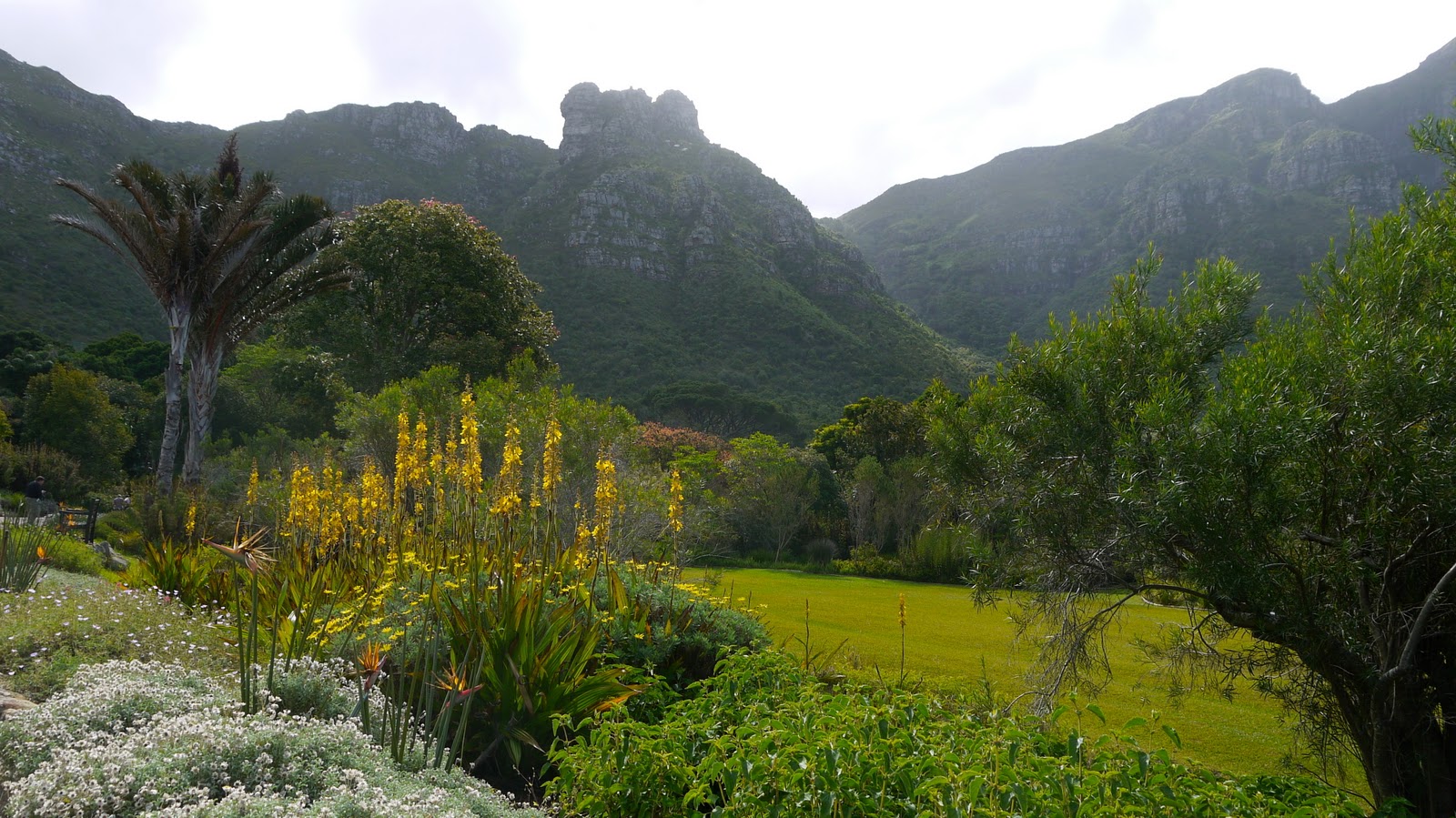
Kirstenbosch Gardens, Cape Town

Johannesburg, city of Jacaranda trees, is also a city of walls, guarded entrances, barbed wire, shanties and crime.  Yet there is so much going on that is good.  We visited Soweto, the middle class Soweto and the poor Soweto, specifically the Klipstown Youth Program sector run by and for poor young people. We were more welcomed than we’d have expected.  The scars of apartheid and race are still relevant and urgent issues.  The generation now in its 20’s or 30’s may have had little experience of apartheid but their parents did.  Apartheid only ended, after all, in 1994.  A fine play we saw at the famous Market Theater, “The Girl in the Yellow Dress,” dealt with such things that divide us – race, language, history. 

A street in Lower Houghton, Johannesburg, with Jacaranda Trees

A street in a shanty part of Soweto


Animal Time at Mala Mala

Mala Mala, is a game reserve surrounded by other private game reserves on the one side and by the vastness of Kruger National Park on the other.   Each day has a rhythm: 5:30am wake up for coffee or tea followed by a game drive in open vehicles led by Shaun, our personal guide (shared in our case by a couple from Spain), return for an outdoor breakfast at 9 or so.  Free time until lunch at 1:30, game drive at 4pm that continues until well after sunset, followed by a late dinner in the boma or on the patio.  After dessert the black camp staff sing a cappella in strong voices. Mala Mala Main Camp looks over the Sand River.  Paul Theroux devoted an upbeat chapter of his otherwise gloomy portrait of Africa in his 2003 book “Dark Star Safari” to MalaMala and the Rattrays who founded it.  And upbeat it should be.  This is a class operation in all respects.  

The animals we saw were all in good health, and despite the intimacy of our contact (mere feet away from lions, leopards), were un-intruded-upon. Happily we heard there is no poaching in this area.  In fewer than two days we’d seen our “Big Five” (lion, leopard, elephant, Cape Buffalo, rhino).  Maybe we were just lucky as we also saw a cheetah, spotted hyena (so close I could have touched him), and were able to follow four lions as they stalked a herd of Cape Buffalo.  After a lot of buffalo observation, they simply fell asleep, evidently not hungry enough and risk averse.  Lions sleep a lot.


There was both abundance and endless varieties of antelope.  We couldn’t help but wonder about the evolutionary logic of dividing a species into so many sub-species:  impala, nyala, kudu, puku, roan, sable, duiker (2 types), klipspringer, suni, dik-dik, oribi, lechwe, bushbok, reedbok (2 types), steenbok, grysbok (2 types), rhebok, gemsbok, waterbuck, and eland – all beautifully marked, the males with exceptional horns. (Lion food! Leopard food!)  

A beautiful Nyala

Not exactly beautiful but more fun to watch were the dung beetles, each one laboring to roll his ball of dung somewhere, usually uphill for some reason, while facing backward, stopping to thwart rivals, climbing on top of his ball quickly to get his bearings lest the ball roll backward which it tends to do, then zipping back into position to push his burden onward over lumps and bumps, tenacious to the last.

Dung Beetles


Animals:  Which is the most vicious?

It’s hippos, hands down.  More people in Africa are killed by hippos than by any other animal.  Cape Buffalo also have a reputation for being ornery.  But pound for pound the honey badger has an even worse reputation.  Lets say a lion came upon the hole of a honey badger and killed and ate its babies.  WIth most animals, that would be that.  Not for the honey badger.  When the mother honey badger returns to the nest she is likely to pick up the scent of the offending lion, track it and stalk it, likely wreaking considerable damage on that lion, making him sorry he ever ate a honey badger.  

Hippos in the Chobe River

We saw no snakes (puff adders abound) but during a night drive with a guy from Botswana he stopped the Land Rover and said “There's a black mamba here, I can smell it.”   We didn’t find it, but there really was a faint odor in the air, something between spicy and rancid. 


Musa

Musa picked us up in the town of Hazyview a couple of days after Mala Mala.  A family man and strong Christian Musa said he thanks God every day.  He seemed not to hear other questions we asked about religion.  He has four children, the last named Syabonga or "thank you" in Zulu as in "Thank you God, this is the last one." “Do people in your country have more than one wife?” he asked.  He has only one, you see. But his brother has five. The king of Swaziland has as many as seven!  During apartheid, there were more men who had many wives, but when apartheid ended in 1994 they got electricity. This made life easier, so there was no more need to have one woman to tend the crops, another to fetch water, another to watch the children, and so forth. Musa also railed against Nigerians (as would many other black Africans we were to meet later) because they bring drugs and other bad things to South Africa.  He deflected questions about Zimbabweans who have been flooding into S.A. and straining the economy, yet we knew there have been serious problems recently including beatings, even murder, of Zimbabwean refugees not far from here.

Tribes

Our guide one day was Khulesi.  He lives in Soweto but is originally from a small village on the Limpopo River. If he could live anywhere in the world, money no object, he would choose to live in his village.  His tribe is Venda.  He speaks six languages including  a click language of the Bushmen. Khulesi can click quite beautifully, sounding almost like a xylophone, clicking with each vowel. It’s fun to listen to.  We tried to make the sounds with mixed success.

We hadn’t thought about the fact that Nelson Mandela is Xhosa, the dominant tribe in South African politics up until now when the current president is Zulu.  This has brought about political change with Zulus, long the majority tribe in South Africa, ruling for the first time and, unsurprisingly, appointing members of their tribe instead of Xhosas.
Christine, from Kenya, the chef of our small hotel in J-burg who awaits her parents' payment of cows as dowry before she marries; she stands next to her chef's certificate, per her request. 

Having just finished reading Peter Godwin’s “Mukiwa: A White Boy in Africa,” I have a far greater awareness of the importance of tribe.  We were in Zimbabwe, a country long dominated by the Shona and near where there had been horrendous conflict with the Matabele in the 1980’s.  In Botswana I assumed our guides would be speaking the language of the country,Tswana.  Not so simple, two of the guides laughed, I speak my tribe’s language and he belongs to another “so we speak 'international!'”

Two nice ladies, Soweto

Rob and Joy

Rob and Joy manage the Muchenji Lodge in Chobe, Botswana. (Chobe has one of the highest elephant concentrations in Africa.) To live this kind of life, managing safari camps and whatnot, they decided long ago to have no children.  Their work timetable is about four years on, followed by a whole year off.  (The one year they spend everything they earned in the four, said Joy.)  Rob has worked all over the continent as a representative, or maybe it was mechanic, for Land Rover.  After that he worked in construction, rebuilding places damaged by wars.  No lack of work there, sadly.  He’s the kind of guy, the “old Africa hand,” who’s seen it all, and who just scoffed when we mentioned the temperature in Victoria Falls had been been pretty high (43 Celsius,109F; several locals complained about it –“too hot for spring”), Roy just said huh, wait until you’ve seen 50! (That would be 122F.)


Rob and I discussed some books about Africa.  I had found Paul Theroux’s “Dark Safari” in the lodge’s library that has an entire chapter on Mala Mala that I quickly reread.  I wasn’t surprised that Theroux thought highly of the management of Mala Mala; he just didn't care for the tourists.  And he has a point: whites come here to see African animals, but have little or no interest in Africans.  Ron shrugged at “Dark Safari.”  Too dark?  Well, no.  Not realistic?  Well no, there’s some truth in it.  How about Mala Mala, I asked. That did it.  Mala Mala, well, said Rob, they have fences (they actually don’t), and there are roads all over the place whereas here in Chobe we have no fences, and it’s so big, over 7,000 square miles (or 4,000, depending on your resource), animals roam completely free.  (Well, yes and no to that.)  Roy recommended "Cry of the Kalahari,” saying he was in on many of the experiences Mark and Delia Owens report in the book, knew them well. The names struck me as familiar. Later I remembered The New Yorker had a major article about the Owenses last year that concerned some controversial events including poaching, a shooting, and a divorce, details I couldn’t recall at the time.  Anyway, Rob claimed there was nothing in the news about the Owenses implying if there was he would know.  I emailed him the article.

Botswana’s biggest industry is mining, and also livestock, but Rob says the money is in beer (St. Louis brand) and towels.  Most towels sold all over the world are made in Botswana.  Who knew! 

Monday, October 17, 2011

OF TREES, MUSIC, AND DEBRIS


The Vergennes Opera House in our town was built as a theater and community center in 1897.  Whether there was ever an opera staged there is doubtful, given that the official history of the building cites all kinds of functions except opera.  Notably, it was the first place moving pictures were shown in Addison county.  It must have grown shabby over the years, because by the early 1970's the theater was shuttered.  It wasn't until 25 years later that community efforts brought about restoration and a new beginning, the opening celebrated with a performance by the Vermont Symphony Orchestra.  I'm mentioning this because a performance of the VSO brought us there again two weeks ago, and another performance by the Champlain Philharmonic had us there again the following weekend.  In such a relatively small space a full orchestra can fill every part of your body with music.  You are inside the music.  The Champlain orchestra had a smaller audience than the VSO and played not on the stage, but on the floor which meant, for example, the soloist in the Saint-Saens cello concerto was five or so feet from me.  I could watch her fingering, see every gesture.  And Beethoven’s Fifth was overwhelming.  It was glorious.

We have also been hearing a sort of music (or is cacophony a better word?) of geese.  Everyone hears geese in the fall, but this is really a lot of geese.  Besides being located on a major sightseeing bicycle route, we’re on a major snow goose and Canada goose migration route.  Dead Creek Wildlife Management Area near us and near Champlain has a viewing area for observing the migration.  Every day we hear the distant honking of hundreds of geese in the western sky, in their rough formations like sloppily lined-up bomber squadrons.  This afternoon, confusingly, several groups looked like they were heading south while several other groups were flying north. But I think they must only have been making a wide sweeping loop before setting their GPS to S.


The flames of fall color have come to the Adirondack mountains across the lake.  Here too, the colors are evident on the higher slopes and some low-lying hollows where the cold sits at night.  Right around the house there is more color than there was yesterday, and, it seems, more this afternoon than this morning.  According to an article in the Burlington Free Press foliage colors are about a week late this year.  There is no hard evidence that this is due to climate change, although, like many changes, it certainly could be.  We have had some heavy frosts (frosts that killed only the basil; not the eggplants or raspberries) but the days have become warm again.  I know this is temporary.
Those eggplants (& tomatoes) just keep coming.
Rain is expected again soon.  Eric the bread maker and rice farmer I wrote about during the summer had been planning on a wet start to the season, then a dry time for picking.  (I gathered that in some areas where this rice is grown the fields are drained at harvest time.)  Heavy rain at the end of the season in September wet his rice field and so he wasn’t able to harvest dry as expected; he had to pick the rice from a wet field and is now waiting for it to dry.

Repair of Route 125 near Hancock where much of the road washed away.
Which brings me to the rivers.  Not all rivers, of course as Otter Creek is unchanged, and the New Haven River doesn’t look noticeably different in most places.  It takes a bit of driving around to see the impact of Hurricane Irene.  Trips to Boston, Manchester, and Brattleboro brought us through hard-hit towns like Hancock, Rochester, Bethel, and Newfane.  Roads have been reopened and most bridges–though not all–have been repaired.  What remains are riverbanks piled up to ten feet high with debris, piles of gravel where there shouldn’t be gravel, the occasional house undermined by water sitting abandoned, and fields covered by silt.  Because of heavy economic pressure to repair roads, construction equipment has been placed in streams to mine the streambed for rocks, turning many 
Hastily replaced road and bridge in Jamaica.
roadside streams into unnatural rock-lined channels.  A walk along the Mad River gave us a closer look and a sense of the force of the water, as well as wonder at how all this crazy stuff­–hay bales, tree branches, lumber, and more is ever going to be cleaned up.  The bridge in the southern Vermont town of Jamaica now spans masses of piled up stones instead of the placid stream it once covered.  The giveaway of flood damage is man-made piles of dirt, stones, tree branches, miscellaneous lumber, and car tires.

Shoreline of the Mad River
Along some streams the damage is less obvious (no washed away road or house), but still severe.  We walked along the Mad River not long ago and it's here, close to the river, where you can see the power of the water.  Bushes look as if they have been run over by trucks, there are pieces of hay bales in trees, and the plastic some farmers use to wrap their bales hangs like toilet paper from tree limbs. The tangle of branches and stray lumber is over four feet high.

Monday, September 19, 2011

TRANSITION TIME, aka HARVEST TIME


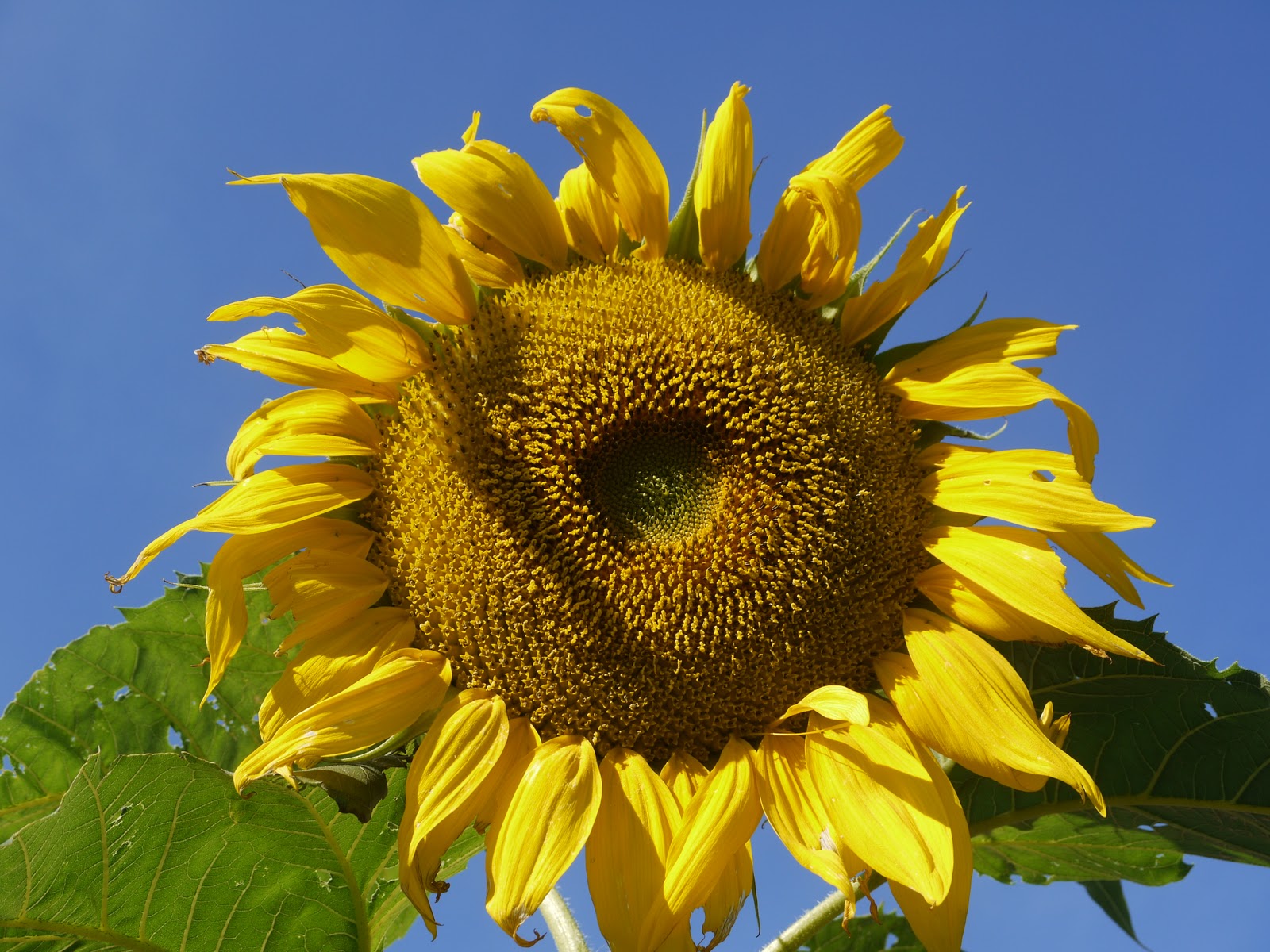
Our single remaining sunflower (after Irene)

It feels like one anyway, a transition.  Yesterday it was summer, and today, just like that, it is fall. (All right, not technically.)   We are looking to the west for the sunset around seven o’clock instead of eight or nine o’clock and I could swear it happened just this week.  


Although it’s been getting colder (suddenly), the garden is still producing great amounts of tomatoes, chile peppers, jalapenos, cucumbers and eggplants.  I have had daily harvests that nearly fill a big basket.  Back in June when I bought the basket it seemed like a frivolous purchase. Why would I need such a big basket for transporting a couple of tomatoes?  Hah!  This soil is something else. We can’t eat them fast enough.  We can’t make enough eggplant dishes.  (There really aren’t that many great eggplant dishes.  Look it up.  You’ll see.)  We can't eat heaps of jalapenos.  Cucumber soup is wonderful, but not for weeks at a time.  Tomatoes, well, they’re a different story.  A tomato dish I made a couple of times captures the essence of summer and is also blissfully simple to prepare (picture a hot day when you don’t really want to cook, and yet you have scrumptious tomatoes):

~12 (depending on size) small tomatoes, cherry or slightly larger
2 garlic cloves
1/3 cup finest quality olive oil
½ cup basil leaves
Sprinkling of salt
Parmesan Reggiano to taste

Quarter or halve the tomatoes, put the garlic cloves through a garlic press, tear up the basil leaves into small pieces.  Pour the olive oil into a small bowl and add the salt, basil, garlic, and tomatoes.  Marinate for one hour or more.  (Don't refrigerate.)  Cook the pasta.  Pour the tomato mixture over the warm pasta and top with Parmesan Reggiano.

Then there are the raspberries.  I thought raspberry season was over.  Not at all.  The raspberries just came into their own about two weeks ago.  What I picked in early August was only a sampling.

Making rows (left rear) and baling (right)
Speaking of changes, our field finally got mowed the other day, and about half of the old hay bales are gone.  The other half may have to wait until all the new hay has been hauled away.  Farmer Dan called around noontime that day to say he’d gotten hold of the guy who made the bales last fall, and they were here mowing and pulling out old bales by one o'clock that same afternoon.  After the newly-cut hay dried for a couple of days after that, he and another guy came by with equipment that tossed the hay into neat rows, then Dan followed up with a baler that sucked up the hay rows and every fifteen minutes or so spit out a giant marshmallow-shaped hunk of hay.  Then he hauled away some of the new bales.  Right  now we have some new bales, some neatly shorn meadow, and some old bales still in place.  Before the mowing, the last time we’d talked with Dan was near the end of July.   As the month of August went by Dan and the guy who left last years’ bales behind were likely taken up with chores more important or urgent than this.  It’s hard to know.  Farmers work in ways still mysterious to me.  Now with the grasses flattened we can walk anywhere in the field.  It gives you a new perspective–no more maze of corridors (made by Ken with our tractor mower) bordered by seven-foot-high grasses. 

New perspective of the sugar house; a hint of green shows where Ken's mowed path was.


Other transitions?  A group of ducks have been visiting the pond nearly every day, six each time.  (Migrating perhaps?  Or fleeing hunters?  It's duck hunting season.)  They come and leave together, never staying for more than a morning, or part of an afternoon.  A heron has been another occasional visitor.  The first time I saw the heron–I’m assuming it’s the same one each time, but I don’t actually know–it made a close pass by the tall front windows above the kitchen counters, casting a startling giant grey shadow.   A couple of days ago Ken watched the heron as it stood immobile near the pond.  With a snap of his head it scooped up not a fish, but a mouse from the grass.  It held the mouse for a minute or so, quite still.  It bent to the water, swished the mouse back and forth a few times, and gulp! down the hatch.